How to choose the right diesel generator set for business?
Running a modern commercial or industrial enterprise requires a continuous, stable power supply to protect sensitive equipment, maintain data integrity, and prevent costly production downtime. When unexpected grid failures happen, having a reliable emergency or primary power source becomes absolutely critical for business continuity, worker safety, and overall facility management. Selecting the ideal diesel generator set for your facility involves a careful evaluation of load requirements, site conditions, operational duty cycles, and fuel efficiency rather than simply picking the highest power rating available in a catalog. Drawing from years of field engineering experience and on-site deployment audits across manufacturing plants, data centers, and commercial complexes, I have found that businesses often make costly mistakes by miscalculating startup surges or overlooking environmental limitations. When investing in a new diesel generator set, facility managers must approach power system selection with a rigorous, data-driven methodology to secure long-term operational resilience while optimizing both capital investment and ongoing operational expenditures.
Assessing Total Electrical Load and Startup Surges
Understanding your precise power consumption profile is the foundational step in choosing the right diesel generator set. Many operators make the mistake of merely adding up the running wattage of all connected machinery, completely ignoring inductive motor loads and compressor startup surges. When electric motors, hydraulic pumps, or HVAC compressors kick on, they can draw instantaneous startup currents that are three to six times higher than their running load. If your backup power unit is sized too tightly, these transient inrush currents will cause severe voltage sips or trigger immediate overload protection shutdowns. Professional engineering guidelines and IEEE standards recommend conducting a thorough load audit that separates continuous baseline loads, intermittent operational loads, and peak transient surges. Furthermore, accounting for future facility expansions by incorporating a 20% to 25% capacity buffer ensures your diesel generator set will not become obsolete as your business scales, protecting your long-term investment.
Evaluating Engine Reliability and Alternator Performance
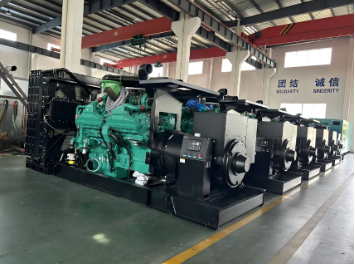
The core durability of any industrial power generation system relies heavily on the synergy between the internal combustion engine and the synchronous alternator. High-performance diesel generator set models utilize turbocharged, heavy-duty diesel engines engineered to deliver consistent torque output under fluctuating thermal and mechanical stresses. When reviewing technical specifications, pay close attention to governing systems—electronic governors provide superior frequency stability and rapid transient response compared to mechanical counterparts, which is vital for sensitive IT hardware, telecommunications equipment, and automated CNC machinery. On the alternator side, brushless designs equipped with Automatic Voltage Regulators (AVR) minimize electrical interference and maintain tight voltage regulation within $\pm1\%$ across varying load conditions. Insist on units featuring Class H insulation and IP23 or higher enclosure ratings to protect internal copper windings against airborne dust, humidity, and corrosive industrial atmospheres, thereby extending operational lifespan and reducing maintenance frequency for your diesel generator set.
Analyzing Operating Environment and Site Constraints
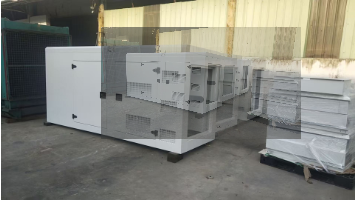
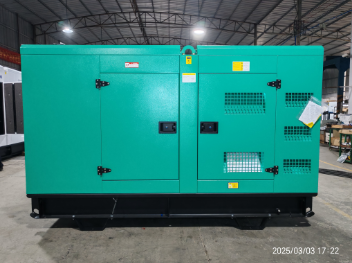
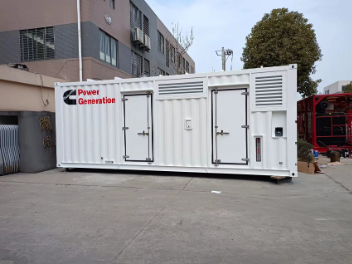
Physical installation parameters and ambient operating conditions exert a massive influence on the real-world performance and cooling efficiency of your commercial power unit. Diesel engines require massive volumes of ambient air for both combustion and radiator cooling; therefore, placing a generator inside a poorly ventilated basement or a cramped utility room without adequate ducting will lead to thermal derating and premature component failure. If your facility operates in high-altitude regions or areas with extreme ambient temperatures, the engine output capacity will naturally decrease due to lower air density—typically requiring a power derating of about 1% for every 100 meters above sea level and 2% for every $5^\circ\text{C}$ rise above standard rating temperatures. Additionally, noise abatement and emission compliance are critical regulatory factors. Installing weather-proof, sound-attenuated acoustic enclosures equipped with high-grade exhaust silencers allows businesses to meet strict local municipal noise ordinances while protecting the equipment from adverse weather, driving rain, and coastal salt fog.
Optimizing Fuel Efficiency and Control Integration
Operational expenditure over the lifecycle of a commercial power asset is heavily dictated by fuel consumption curves and intelligent control system integration. Modern industrial diesel generator set units feature advanced electronic fuel injection systems that optimize combustion timing across partial and full loads, significantly lowering hourly diesel consumption during extended grid outages. To maximize operational oversight, look for digital control panels equipped with microprocessor-based monitoring, automatic transfer switch (ATS) compatibility, and remote telemetry capabilities. These intelligent controllers continuously monitor critical parameters including oil pressure, coolant temperature, battery voltage, and fuel levels, while automatically dispatching fault warnings or shutting down the unit before minor anomalies escalate into catastrophic engine failures. Integrating your backup power assets into a centralized building management system (BMS) empowers facility engineers to monitor fleet health in real-time, schedule automated weekly exercise runs, and streamline preventive maintenance routines with absolute precision, ensuring reliable power security for decades to come.
Ensuring Long-Term Compliance and Safety Protocols
Beyond initial procurement and technical installation, maintaining ongoing regulatory compliance and safety standards is essential for every commercial power deployment. Establishing rigorous testing protocols, conducting bi-annual load bank testing, and maintaining comprehensive service logs ensure your backup power infrastructure remains fully operational whenever grid emergencies arise. Partnering with experienced manufacturers and adhering to professional engineering best practices guarantees that your facility remains protected, efficient, and fully compliant with environmental and safety regulations.
 EN
EN