EN
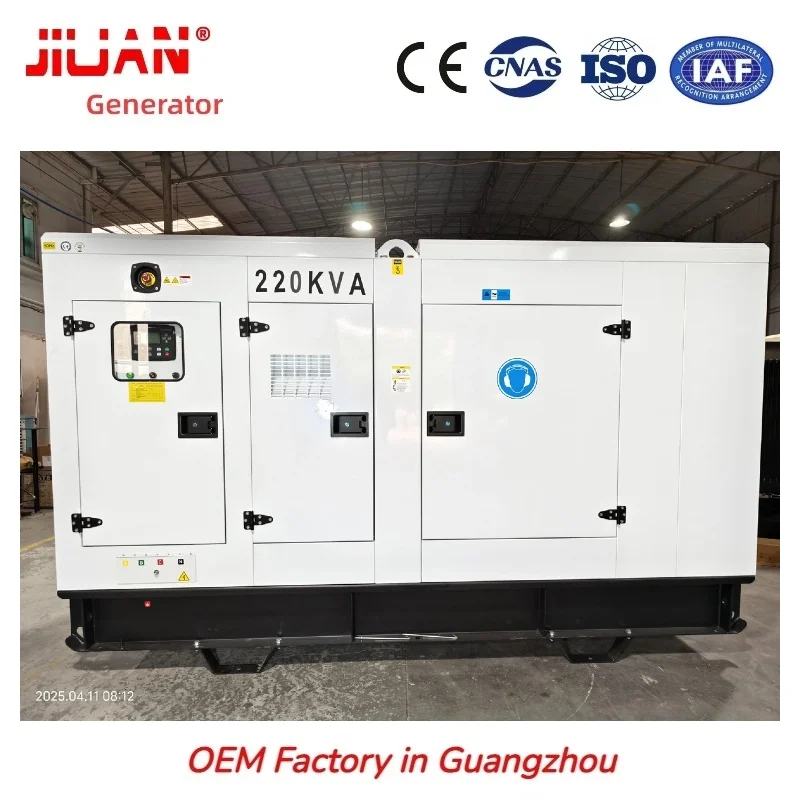
Industrial Diesel Generator Uses in Factories
Inside a modern manufacturing facility, an industrial diesel generator functions as a core pillar of a comprehensive business continuity plan rather than serving merely as a backup box that clicks on when the local grid drops. Choosing the right factory power solution keeps selected production machinery, safety systems, digital control panels, and logistics infrastructure fully energized while public utility power remains unavailable or unstable. Consequently, facility planners and plant managers utilizing a reliable backup generator must evaluate more than just equipment size. They need to determine precisely which critical loads must remain active, for how long, and under what specific environmental site conditions.
For industrial plant managers, engineering contractors, and global equipment distributors, this distinction is vital. A generator specified solely to preserve basic IT data and emergency exit lighting requires an entirely different engineering approach than one designed to support a heavy process line, refrigeration system, water pump station, or isolated manufacturing operation. Defining operational duty prior to requesting commercial quotations ensures that technical discussions remain productive and minimizes the risk of purchasing a mismatched power system.
Maintaining Critical Factory Operations During Utility Outages
The most common application of an industrial diesel generator is emergency standby power. When normal utility electricity is disrupted, a properly engineered factory power solution detects the failure, automatically starts the backup generator, and transfers designated electrical loads. Within a busy factory environment, these prioritized loads typically encompass emergency lighting, perimeter security, life-safety equipment where permitted, automated control panels, critical communications, computer hardware, compressed-air systems, and essential material-handling equipment.
Attempting to power an entire factory simultaneously is rarely cost-effective or practical. Many industrial facilities establish a strict priority list: first safeguard on-site personnel and hazardous equipment, next preserve core process stability, and finally support the orderly activities required for a smooth restart. This structured method allows electrical engineers deploying an industrial diesel generator to effectively manage load shedding, staged motor starting sequences, and high initial starting currents without over-sizing equipment. When integrated with a robust factory power solution, facilities can maintain optimal operational continuity.
Supporting Controlled Shutdowns and Safe Restarts
Certain manufacturing processes react poorly to sudden, unannounced power losses. A brief electrical interruption can freeze production conveyors, wipe out real-time batch logs, leave automated valves in unsafe positions, or ruin raw materials trapped inside thermal machines. An industrial diesel generator provides the necessary runtime required to bring sensitive processes to a safe, controlled stop, maintain visibility on control screens, and restart heavy equipment in a precise, logical sequence once the main grid restores power.
This capability does not imply that every backup generator instantly restarts an entire factory floor. Transfer timing, engine load acceptance, control logic, and equipment interruption tolerances require careful review. For highly sensitive electronic controllers, the factory power solution package is often integrated with an uninterruptible power supply to bridge the brief transition gap smoothly while the heavy industrial diesel generator comes online.
Providing Reliable Prime Power for Remote Industrial Sites
Many manufacturing workshops, remote processing units, and construction-linked facilities operate far beyond the reach of a stable public electrical grid. In these challenging scenarios, an industrial diesel generator serves as the primary, continuous power source for extended operational periods. Under prime-power conditions, fuel logistics, preventative maintenance intervals, high ambient temperatures, and daily load profiles demand much greater engineering scrutiny than short-duration backup generator setups.
A comprehensive prime-power evaluation calculates expected operating hours, daily load fluctuations, and the presence of heavy inductive motors, electric welders, or nonlinear electronic drives. Equipment suppliers and engineering teams then evaluate the complete factory power solution package—comprising the diesel engine, alternator, digital controls, fuel storage tanks, acoustic enclosure, and service access—as a single integrated system rather than relying on a nameplate rating alone. Deploying an advanced industrial diesel generator ensures seamless operation across isolated terrains.
Stabilizing Essential Factory Utilities and Supporting Systems
In numerous industrial plants, the most critical loads are not the primary production machines themselves, but rather the supporting utilities. Industrial water treatment, sump drainage pumps, ventilation exhaust fans, cold storage monitoring, air compressors, and facility security are all indispensable for maintaining safe, continuous site operations. An industrial diesel generator supports these auxiliary utilities, ensuring the facility remains manageable and compliant during prolonged utility blackouts as part of an integrated factory power solution.
Building an accurate critical-load schedule requires collaboration among production supervisors, plant maintenance engineers, and electrical specialists. A load with minimal power consumption may carry profound operational consequences, whereas a massive machine might be safely paused during an outage. Documenting normal running demands, motor-starting methods, voltage requirements, phase configurations, and desired runtime gives designers deploying a backup generator the ideal foundation for equipment selection.
Understanding Factory Generator System Integration
A standard industrial diesel generator setup integrates the diesel engine set, bulk fuel storage, digital control panel, protective breakers, and an automatic transfer switch. The transfer switch constantly monitors the utility source and signals the backup generator controller whenever grid parameters drift outside acceptable limits. Once generator voltage and frequency stabilize, the switchgear transfers the critical load. When utility power returns and remains stable for a preset duration, the load transfers back, and the factory power solution completes its automated cool-down cycle.
The electrical transfer mechanism deserves just as much engineering attention as the generator itself. Priority controls and load-shedding relays prove particularly useful when the power system is designed to feed essential factory circuits rather than the entire campus. Comprehensive switchgear, system grounding, and strict local code compliance must always be verified by qualified professionals for each installation site utilizing an industrial diesel generator.
Key Considerations Before Selecting a Power System
-
Load Analysis: Separate critical, deferrable, and nonessential loads, accounting for motor-starting surges and peak operational demands when sizing an industrial diesel generator.
-
Operating Duty: Clearly define whether the backup generator operates in emergency standby, frequent backup, prime power, or continuous base-load mode.
-
Runtime and Fuel: Confirm required operating hours, bulk fuel storage rules, refuelling access, and safe maintenance clearance for the chosen factory power solution.
-
Site Environment: Evaluate ambient temperature, airborne dust, relative humidity, altitude, ventilation routes, noise restrictions, and physical footprint when installing any industrial diesel generator.
Summary of Strategic Power Investments
An industrial diesel generator plays an indispensable role in modern factories by safeguarding business continuity, supporting safe equipment shutdowns, maintaining essential plant utilities, and supplying reliable electricity where local grids fail. Achieving optimal reliability depends entirely on matching the backup generator system to verified electrical loads, duty cycles, environmental realities, and long-term service capabilities. JIUAN power leverages advanced manufacturing expertise and robust global supply chain services to help industrial buyers design, specify, and deploy dependable factory power solution offerings tailored to demanding operational conditions worldwide. Final ratings, configuration details, and delivery scopes should always be verified in formal technical documentation.